

Mid-Project Report: University of Antwerpen
Taking advantage of the reverse Boudouard reaction: Improving plasma-based CO2 conversion beyond the state-of-the-art
As the world moves towards renewable energy, there is growing interest in technologies that can not only reduce carbon emissions, but also make use of CO₂ as a valuable raw material. One promising approach is to convert CO₂ into carbon monoxide (CO), an important building block for producing chemicals and synthetic fuels. However, CO₂ is a very stable molecule, meaning that breaking it apart requires a significant amount of energy.
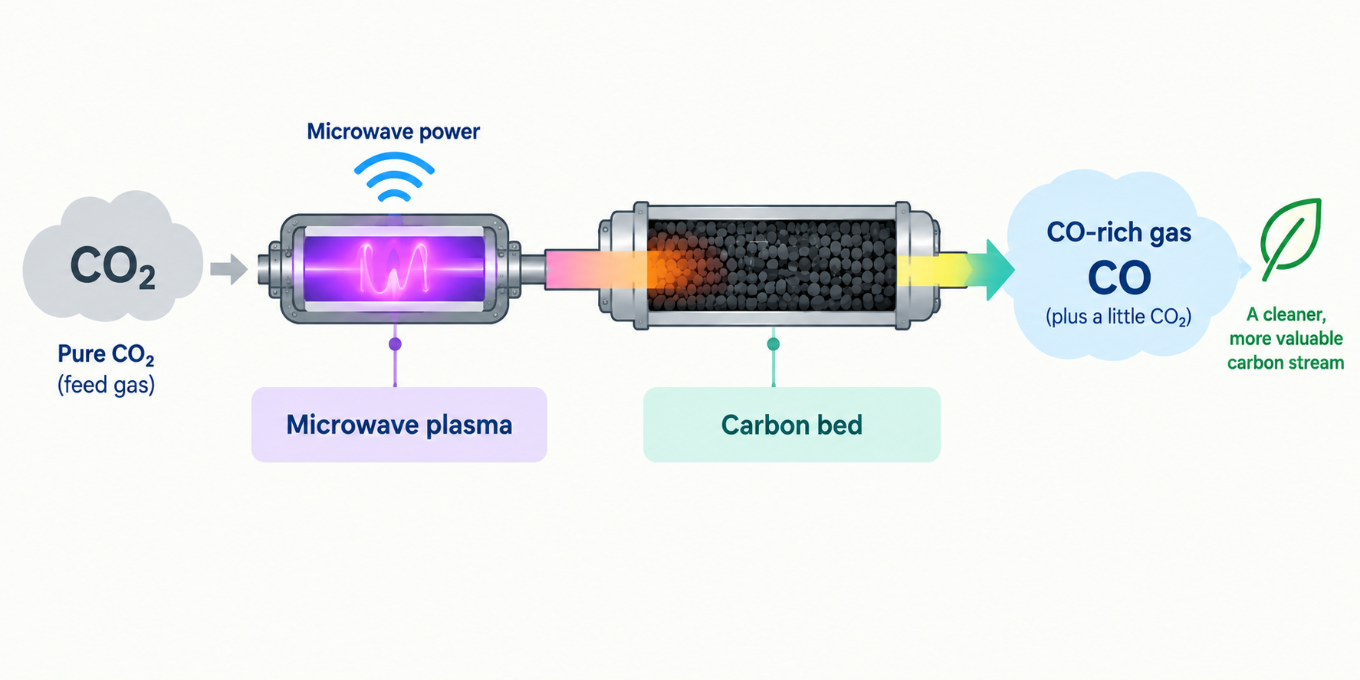
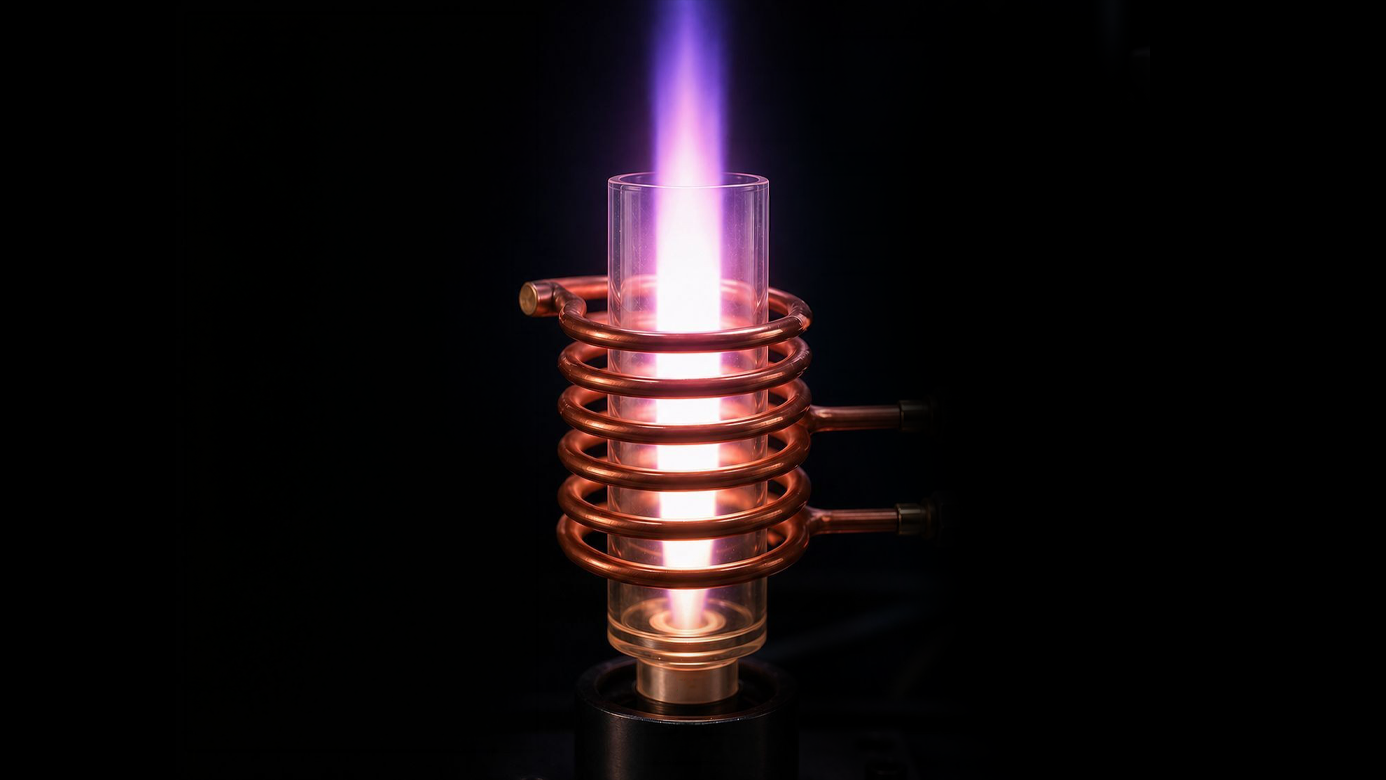
Over the past two years, we have investigated a new way of making this conversion more efficient by combining microwave plasma with a carbon bed. Plasma is a gas with highly energetic particles such as ions, electrons and radicals that can activate CO₂. The hot gas leaving the plasma then passes through a bed of carbon, where an additional chemical reaction – known as the reverse Boudouard reaction – converts more CO₂ into CO.
The carbon bed plays several roles. Most importantly, it provides an additional route for converting CO₂ into CO. It also captures oxygen produced during the plasma process. This is particularly useful because oxygen can otherwise react with CO and turn it back into CO₂. Furthermore, oxygen in the exhaust gas stream would be highly detrimental for other industrial processes downstream of the plasma reactor that would eventually turn the carbon monoxide into synthetic fuels. In all of our experiments with a carbon bed, the oxygen concentration in the exhaust gas was below 0.03%, meaning that the resulting CO-rich gas would require less effort to purify.
We investigated what happens when the carbon bed is placed closer to the plasma. A shorter distance improved performance because more heat reaches the carbon and fewer reactive species are lost before reaching it. With our larger carbon-bed design, we achieved a peak CO₂ conversion of 90%, producing a product gas containing 97% CO. These represent the highest CO₂ conversion and CO concentration reported in the literature for pure-CO₂ plasma systems at the time of the study.
We also found encouraging results when operating slightly above atmospheric pressure up to 1.7 bar: there was no statistically significant reduction in performance. This could be important for future industrial systems because operating at higher pressure may reduce equipment requirements and carbon-bed volume.
Overall, this work demonstrates the potential of microwave plasma and carbon beds as an electricity-driven route for converting CO₂ into a useful chemical feedstock. The findings provide important guidance for designing and scaling up the technology.
Recently, we replaced the carbon bed by bio-oil obtained from sewage sludge which will be injected into the post-plasma region of the reactor. Since bio-oil contains also hydrogen, this will allow us to directly produce syngas – a mixture of carbon monoxide and hydrogen that can be used as a building block for fuels and chemicals.